
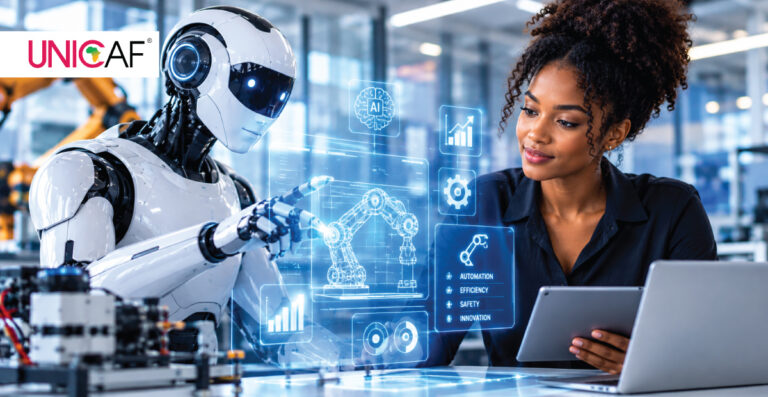
Once largely confined to factory floors, robotic systems are increasingly moving beyond performing repetitive, pre-programmed tasks towards applications that demand greater flexibility, intelligence, and adaptability. In the age of AI, advances in machine learning and computing are unlocking new opportunities for future innovation in robotics, with next-generation systems becoming more capable of perceiving their surroundings, interpreting information, learning from data and experience, and responding to changing operational parameters and environmental conditions in real time.
How Is AI Transforming Robotics?
Traditional industrial robots operate through fixed programming, performing the same precise motion or set of actions repeatedly, regardless of changes in their environment. AI is fundamentally changing this approach, by giving robotic systems the ability to perceive, interpret, and respond, in real-time, to the world around them.
- Computer Vision and Perception
AI-enabled computer vision equips robotic systems with the ability to successfully navigate unstructured, real-world spaces by identifying objects and detecting obstacles dynamically, allowing them to operate in a wider range of spaces.
- Machine Learning and Adaptability
Rather than relying solely on pre-programmed instructions, AI-powered robotics can learn from data and experience, improving their performance over time and adapting to new tasks without requiring complete, manual reprogramming.
- Natural Language Processing
Advances in natural language processing improve the ability of AI-powered robotics to more effectively and efficiently understand and respond to spoken or written instructions, making human-robot interaction more intuitive and accessible.
- Reinforcement Learning for Complex Tasks
Reinforcement learning techniques enable robots to learn optimal behaviors through trial and error in simulated environments, accelerating the development of robotic systems capable of handling complex, multi-step tasks.
Which Industries Will Be the Most Transformed from AI-Powered Robotics?
- Manufacturing
By automating production processes, enhancing quality control, and adapting to changing demands, AI-powered robotics can help manufacturers reduce errors and material waste, increase productivity, and improve operational efficiency.
- Logistics and Warehousing
AI-powered robotics can be used to automate various logistical efforts such as warehouse picking, sorting, and inventory management, enabling organisations to manage growing demand more effectively.
- Healthcare
Robot-assisted surgical systems, AI-powered diagnostic tools, and robots used in patient care and hospital logistics can improve healthcare delivery, increase operational efficiency, and contribute to better health outcomes.
- Autonomous Vehicles and Delivery Bots
Both autonomous vehicles and delivery bots heavily rely on AI systems for navigation, obstacle detection, and real-time decision-making, representing one of the most visible and closely watched applications of AI-powered robotics in the public sphere.
- Household and Consumer Robotics
Robotic vacuum cleaners, smart home assistants, and emerging humanoid robot prototypes are gradually bringing AI-powered robotics into everyday life, although most consumer applications remain more limited in scope than their industrial counterparts.
- Agriculture
AI-powered agricultural robots can perform tasks such as crop monitoring and automated harvesting, reducing pesticide use through targeted applications, improving resource efficiencies, and optimising yields.
What Are the Benefits of AI-Powered Robotics?
- Increased Efficiency and Productivity
AI-powered robotic systems can perform repetitive, time- and labour-intensive tasks with high precision over extended periods, while adapting to changing conditions, reducing error rates, enhancing productivity, and improving overall operational efficiency across industries.
- Alleviates Labour Shortages
Industries such as manufacturing, logistics, and agriculture face persistent labour shortages. AI-powered robots can help bridge workforce gaps by taking on repetitive and time-consuming tasks, maintaining operational continuity and sustaining output.
- Minimises Safety Risks for Human Workers
AI-powered robotics can reduce human exposure to safety risks by performing a range of hazardous tasks, such as handling dangerous materials or operating in high-risk conditions.
What Are the Challenges Facing the Future of AI-Powered Robotics?
- Technical Limitations
Despite significant advances, robotic systems still struggle with tasks requiring fine motor skills, common-sense reasoning, and adaptability to highly unpredictable environments, areas in which humans retain an advantage.
- High Development and Deployment Costs
Advanced AI-powered robotic systems are expensive to develop, deploy, and maintain, limiting their potential adoption, particularly in lower-income countries and smaller organisations.
- Workforce Displacement Concerns
With robotic systems taking on more tasks previously performed by humans, concerns about job displacement remain high, particularly in manufacturing, logistics, and other labour-intensive industries, prompting ongoing debate regarding workforce reskilling and upskilling, as well as the broader economic and social measures needed to manage this fundamental transition.
- Safety and Regulatory Challenges
As robots become increasingly autonomous and interact more closely with humans, robust safety standards and effective regulatory oversight are essential. These considerations are particularly important in high-stakes applications, such as autonomous vehicles and robot-assisted surgery, where system failures can have serious consequences.
- Ethical Considerations
Questions concerning accountability when AI-powered robots make errors, along with broader concerns regarding privacy and surveillance in robotics applications, remain important considerations as adoption expands.
How Can Students Pursue a Career in AI-Powered Robotics with Unicaf?
At Unicaf, the leading provider of online higher education in Africa, we are committed to advancing innovation in education and empowering students to benefit from future opportunities through highly-relevant, forward-looking academic programmes. In collaboration with our esteemed university partners in the UK and Africa, students can earn internationally recognised degrees in disciplines that underpin advances in AI and robotics, including:
- BSc in Computer Science and a PhD in Information Technology from Unicaf University, Malawi
- MSc in Computer Science from Unicaf University, Zambia
- BSc (Hons) in Computing from the University of Suffolk
- MSc in Big Data Technologies, MSc in Computer Science, and an MSc in Data Science from the University of East London
What Will the Future of Robotics Look Like in the Age of AI?
Although significant technical and ethical challenges remain, the future of robotics in the age of AI is ushering in a new era of automation, one defined not by rigid, pre-programmed machines, but by adaptable, perceptive systems capable of operating in complex, real-world environments.
For individuals and organisations alike, understanding this shift offers valuable insights into how work, industry, and daily life may evolve in the years to come, as robotic systems become more capable, adaptable, and deeply integrated into the world around us.
Looking ahead, several key developments are likely to shape the future of robotics, such as:
- Further Generalisation
Future robotic systems are expected to become increasingly versatile and capable of performing a broader range of tasks, moving beyond the narrow, specialised functions that many current systems are designed to carry out.
- Humanoid Robots
Significant investment is being directed towards developing humanoid and general-purpose robots capable of operating in human-centred environments, from warehouses and industrial facilities to domestic settings.
- Enhanced Human-Machine Collaboration
With robots becoming more adept at understanding natural language and interpreting contextual cues, human–machine interactions and collaboration are set to become more seamless and intuitive.
- Expansion Into New Industries
As costs decrease and capabilities advance, AI-powered robotic systems are expected to see wider adoption across industries, extending beyond the traditional applications of earlier generations of robotics in manufacturing.
- Greater Focus on Safety and Regulation
Expect to see greater attention from regulators and industry groups focused on establishing new safety standards, particularly for robotic systems operating in close proximity to humans.