Unicaf University, Malawi proudly hosted the Inter-University Youth Debate Championship on August 28, bringing together students from higher education institutions across the country, including DMI University, Exploits University, University of Lilongwe, and of course Unicaf University, Malawi, for competitive debate centred on youth unemployment and the future of work.
With the motion, ‘This House believes that entrepreneurship is a more realistic solution to youth unemployment than formal employment in developing countries’, the debate provided a valuable platform for students to demonstrate their critical thinking, research, public speaking, argumentation, and teamwork skills, as well as their ability to engage constructively with opposing perspectives, while addressing important pathways to addressing youth unemployment within developing economies.
The competition consisted of two semi-final debates, followed by the Grand Final. Judges from the participating universities assessed each debate, ensuring an objective adjudication process and broad institutional representation. Participants were evaluated based on several criteria, including argument and content, evidence and research, analysis and rebuttal, structure and organisation, delivery and communication, as well as teamwork and coordination.
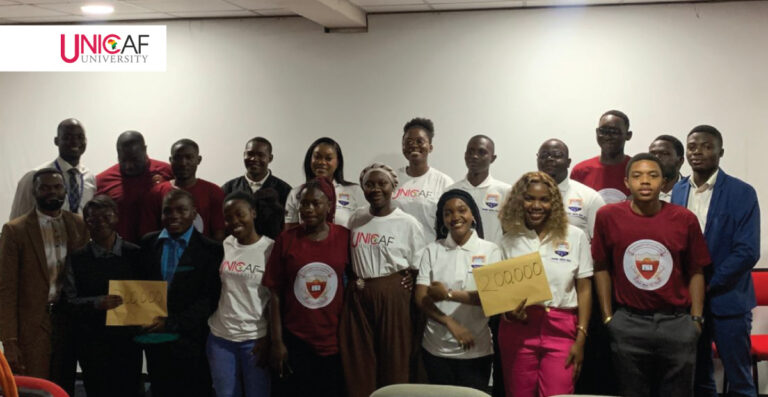
The Grand Final was contested by DMI University and Exploits University, with both teams presenting strong arguments and demonstrating commendable preparation and confidence. DMI University emerged as the winner however, receiving the first-place prize of MK300,000, while runners-up, Exploits University, received MK200,000. Unicaf University, Malawi took third place, and was awarded MK100,000 in prize money.
Unicaf University remains committed to supporting young people in developing their leadership, communication, and professional skills, not only by hosting competitive debates and other valuable learning initiatives such as this, but also through its continued provision of generous scholarship opportunities, a wide range of academic programmes, and accredited higher education degrees, further highlighting Unicaf University’s dedication to improving access to higher education and providing greater learning opportunities for young people.
We look forward to engaging in more such informative and insightful initiatives again in the future, empowering students with the knowledge and skills they need to succeed in both current and emerging learning and working environments.