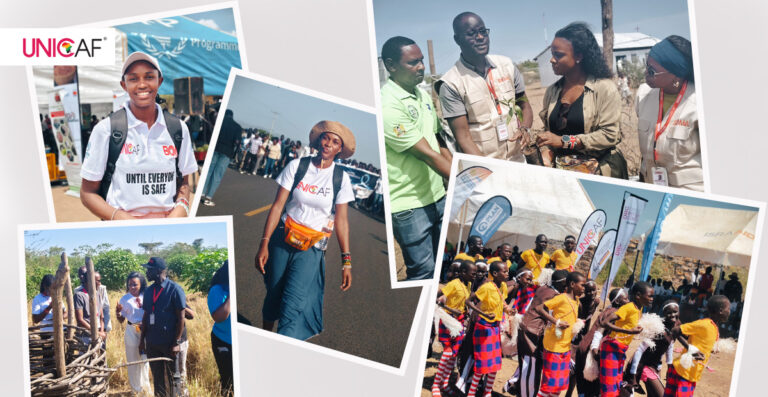
Unicaf successfully participated in World Refugee Week 2026, a week-long series of activities held in Kakuma, Turkana County, under the global theme “Until Everyone is Safe.” Through active engagement with refugee communities, humanitarian organisations, development partners and government stakeholders, Unicaf reaffirmed its commitment to expanding access to quality education and creating opportunities that empower displaced populations to build sustainable futures.
The week culminated in the global observance of World Refugee Day on 20 June and brought together key organisations including the United Nations High Commissioner for Refugees (UNHCR), BOMA, the World Food Programme (WFP), development agencies and community leaders working to improve the lives of refugees and host communities.
For Unicaf, participation in World Refugee Week extended beyond awareness raising. It represented a strategic opportunity to demonstrate how education can serve as a powerful catalyst for social and economic transformation among vulnerable populations.
Promoting Educational Access During the Day of the African Child
One of the week’s key engagements was participation in the Day of the African Child celebrations on 16 June, a continent-wide commemoration that highlights the importance of children’s rights and equal access to education.
The event provided an opportunity for Unicaf to engage directly with children, youth, parents, educators and community stakeholders while promoting the role of education as a pathway to stability, empowerment and long-term self-reliance.
For refugee children and young people, access to quality education remains one of the most effective tools for overcoming the challenges associated with displacement. Through its participation, Unicaf showcased educational pathways available to learners and highlighted opportunities for future academic advancement through internationally recognised higher education programmes.
The sessions reinforced the message that education remains one of the most effective tools for supporting refugee youth in building stable and productive futures.
Community Engagement Through Skills and Education Awareness Sessions
Throughout the week, Unicaf participated in a series of skills development and education awareness sessions with refugee youth groups, community leaders, and programme participants. These engagements provided opportunities to share information about internationally recognised degree programmes and scholarship options available through Unicaf’s partner universities.
A strong focus was placed on participants involved in BOMA’s Poverty Graduation Framework, where discussions centred on how access to higher education can complement ongoing economic empowerment efforts.
The sessions generated strong interest among participants, with many expressing enthusiasm about pursuing further studies as a pathway to improved employability and long-term economic stability.
Visibility and Outreach at the Market Day Exhibition
Unicaf also took part in the Market Day Exhibition, one of the key public-facing events during World Refugee Week.
The exhibition brought together refugee entrepreneurs, community organisations, and humanitarian agencies, creating a dynamic platform for interaction and knowledge exchange.
Unicaf used the opportunity to engage directly with prospective students and community members, raising awareness about available scholarships and flexible online learning opportunities.
Ms Winnie Rachael, Unicaf’s Country Manager, Kenya, delivered remarks highlighting the importance of education in supporting entrepreneurship, innovation, and skills development, particularly within displaced communities.
The exhibition significantly increased visibility for Unicaf within the Kakuma refugee ecosystem and facilitated direct engagement with individuals interested in pursuing higher education opportunities.
Environmental Engagement at Joy Primary School
As part of the week’s sustainability activities, Unicaf participated in a tree planting exercise at Joy Primary School in Kakuma 2.
The initiative brought together learners, educators, humanitarian partners, and community stakeholders in a collective effort to promote environmental awareness and climate resilience.
Participants planted fruit trees and indigenous species intended to support long-term environmental improvement and benefit the school community.
The activity also provided an opportunity for informal engagement between stakeholders working in the refugee response sector, reinforcing shared commitments to community wellbeing and sustainability.
World Refugee Day Solidarity Walk
World Refugee Week concluded with the World Refugee Day Solidarity Walk, a five-kilometre walk organised by humanitarian and development partners operating in Kakuma.
The walk brought together organisations including UNHCR, BOMA, WFP, DanChurchAid, GIZ, Village Enterprise, Danish Refugee Council, FilmAid Kenya, Refugee Consortium of Kenya, Turkana County Government, and Elimu Yetu Coalition, among others.
The event served as a public demonstration of solidarity with refugees and highlighted the collective commitment of participating organisations to improving access to protection, opportunity, and dignity.
Unicaf’s participation reinforced its ongoing focus on educational inclusion and its belief in the transformative power of higher education as a pathway to resilience and self-reliance.
Conclusion
Unicaf’s participation in World Refugee Week 2026 demonstrated the institution’s continued commitment to expanding access to education for vulnerable and displaced populations through direct community engagement, awareness campaigns, and scholarship outreach activities.
Through participation in public events, exhibitions, awareness sessions, and collaborative humanitarian activities, Unicaf strengthened its visibility within the refugee response ecosystem and reinforced its role as a provider of accessible, flexible, and internationally recognised higher education opportunities.
Aligned with the global theme “Until Everyone is Safe,” Unicaf remains committed to supporting individuals through education and ensuring that learning opportunities remain accessible to those who need them most, regardless of circumstance.